Key points
- OffMarket publicly launched October 14 to trade Polymarket markets without directly linking positions to a main account.
- The trades, sizes and timing remain visible on Polygon, so privacy is partial and inference remains possible.
- The service is independent of Polymarket, currently has a spokesperson-reported 1,000 USDC deposit cap, and follows geographic restrictions.
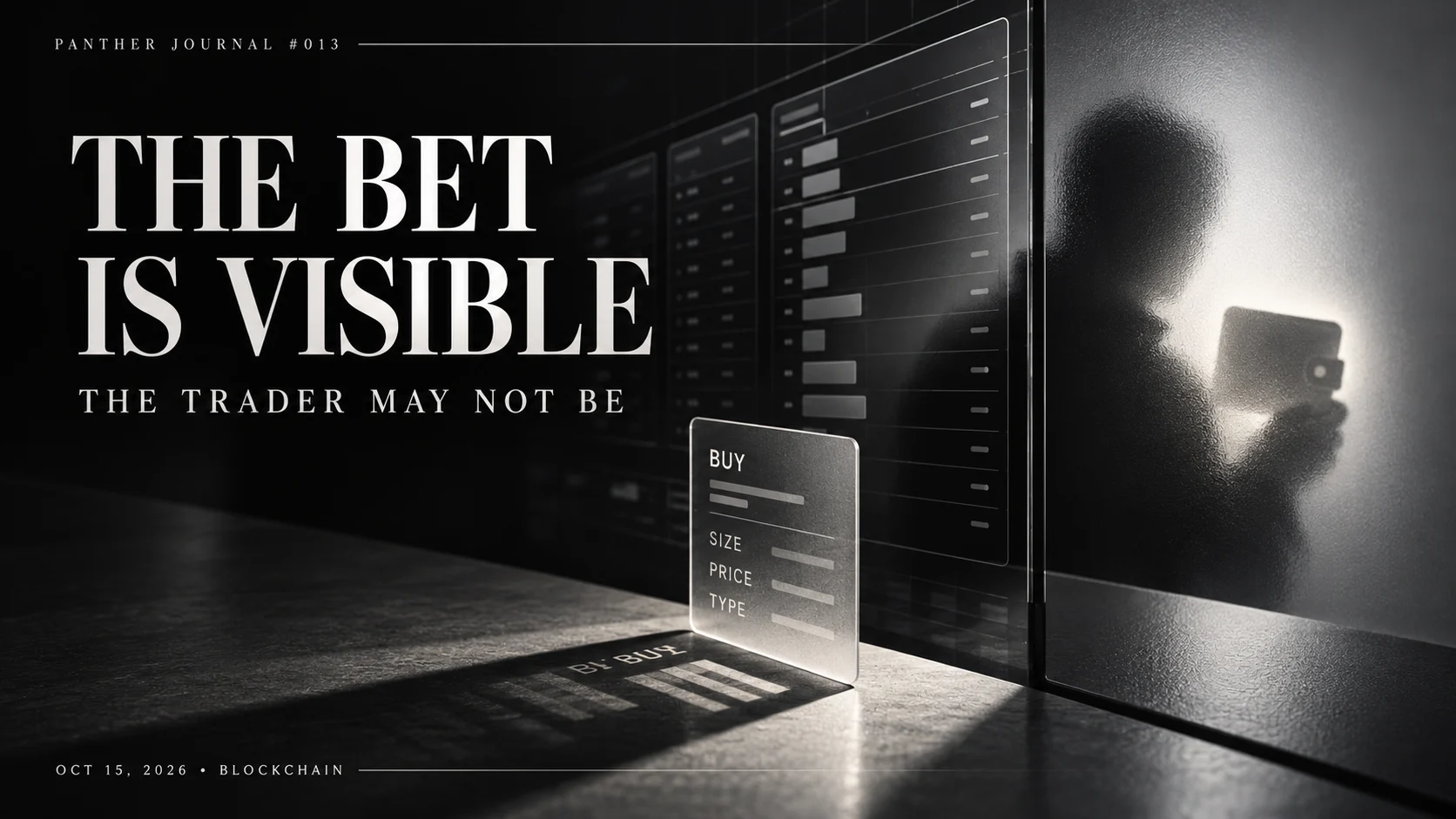
A bet is placed. The market can see the position and its price. What it may not see is the trader’s familiar wallet.
That is the distinction behind OffMarket, a StarkWare-backed interface opened to the public on October 14 after a limited release. It routes orders to Polymarket’s existing markets while using a Starknet privacy pool and fresh Polygon trading wallets to break the obvious public link between a user’s account and individual positions. The launch was independently reported by The Block. It is a privacy improvement with a sharp boundary, not a promise of invisible trading.
What changes when the wallet link disappears
On ordinary Polymarket activity, a public wallet can become a readable trail of positions, timing and results. OffMarket says a user deposits USDC into a Starknet privacy pool, then signs to derive a fresh Polygon wallet for each position. The fresh wallet places the order on Polymarket. According to the product’s own explanation, the user retains control of the keys and the service is not affiliated with Polymarket.
The practical appeal is clear: someone watching a known wallet would no longer automatically see every bet connected to that account. The existing Polymarket order book and prices remain in use. The Block reported a current deposit cap of 1,000 USDC per account, citing a StarkWare spokesperson; that limit may change.
The trade is still on-chain
OffMarket’s own FAQ says an observer can still see a transfer from the Starknet pool to a Polygon address, the address trading on Polymarket, and its positions and profit or loss. The Block confirmed that market, price, size and timing remain visible. A distinctive position or a thin pool of plausible users may still help an observer infer who traded.
The product also has a compliance exception to its privacy claim: its FAQ says an auditing entity holds a viewing key in escrow for tracing. The Block identified Financial Privacy Inc. as the firm holding a master viewing key in a secure enclave, according to StarkWare, with disclosures subject to reviewed legal requests. That key is described as a means of viewing information, not spending funds. These are claims about the system’s design and governance, not an independent guarantee of anonymity or security.
The interface is a separate builder, not an official Polymarket product or a formal partnership. It follows Polymarket’s geographic restrictions, including the U.S. ban, according to The Block. A region restriction displayed on OffMarket’s site reinforces that access is not universal.
What a trader should actually ask
The first question is what kind of privacy matters: hiding a public link to the main wallet is different from hiding the bet itself. The second is whether the fresh wallet and cross-chain flow add costs, delay or recovery steps that matter for the strategy. The Block said orders take roughly a minute to execute, citing StarkWare; traders should check the live interface rather than assume an ordinary Polymarket order behaves identically.
There is a wider trade-off. Public positions let other people audit what happened, but they also make strategies and portfolios easy to copy or target. A privacy layer can reduce routine exposure without making market activity disappear. Its design places trust in the code, the user’s key management and the stated controls around viewing access.
The Panther takeaway
OffMarket does not erase a prediction-market bet. It tries to sever the easiest path from a visible bet back to a known trader. That narrower promise is useful—and much easier to test than “anonymous trading.”
For a practical view of what an ordinary public address reveals, see Panther’s guide to tracing a crypto wallet.
Sources and verification
- OffMarket’s product FAQ — developer description of wallet derivation, observable transactions, custody and the viewing-key exception.
- The Block, October 14, 2026 — independently reported public launch, spokesperson-sourced deposit limit, execution details, affiliations and limits.
- StarkWare, STRK20 pool formal verification, July 23, 2026 — background on the shared privacy-pool architecture; verification of pool logic is not proof of every OffMarket component.
Responses
No responses yet. Start the conversation.
Panther Journal — The intelligence brief
Stay ahead of the story.
Free. New investigations delivered when published. Unsubscribe anytime.