Key points
- ASIC proposes restrictions on benefits paid to favor one platform token over another, alongside trading-conflict and transparency rules.
- The custody draft focuses on legal rights, safeguarding and the use of client assets; none of this makes a listed token risk-free.
- Comments close November 27, 2026. The current consultation targets final guidance in March 2027 and framework commencement on April 8.
PANTHER JOURNAL #016
The token at the top of the screen looks like a discovery. The ASIC crypto platform rules consultation asks a less comfortable question: who paid for the shelf it sits on?
Australia’s regulator released Consultation Paper 392 on October 15, 2026. Behind the licensing language is a proposal to restrict benefits paid to favor one platform asset over another. The same package examines how operators hold customer assets and manage their own trading conflicts.
For a memecoin buyer, that distinction is useful. Visibility can influence attention before a trader ever reads a contract. A platform’s commercial incentives deserve scrutiny alongside the token’s mechanics.
What the ASIC crypto platform rules would change
ASIC’s draft transaction standards include a prohibition on operators accepting financial or non-financial benefits to preference one underlying asset over another. The draft calls these shelf-space fees. It also addresses principal trading by order-matching platforms, with specified exceptions, and pre- and post-trade transparency.
This is a proposal about platform conduct. It should not be stretched into a claim that Australia has already banned every listing fee, every sponsored crypto placement or every paid marketing arrangement worldwide. The legal scope, exceptions and final wording matter.
CoinDesk independently reported the consultation on October 15. The practical question for readers is whether a venue explains why an asset is promoted, who provides liquidity and where its interests may conflict with yours.
The balance on a screen needs a legal foundation
The proposed asset-holding standards would require operators to explain the legal arrangement behind customer holdings, including relevant rights and the consequences of operator or custodian insolvency. They also address segregation, reconciliation, use of assets and oversight of outside custodians.
That changes the questions a customer should ask. Can the operator lend or stake the assets? What authorization applies? Who controls them, and what claim survives if the business fails? A reassuring dashboard cannot answer those questions on its own.
The draft is not a promise that every customer gets every asset back in every failure. Legal protections depend on the arrangement and execution. Outsourcing custody is also not the same as outsourcing responsibility: the proposal keeps obligations on the operator that selects and monitors a custodian.
Panther’s tokenized-stock guide explores a related issue: a token and the legal rights behind it are separate things to inspect.
The unresolved cost of a stronger gate
Independent analysis by Hall & Wilcox highlights three alternative net-tangible-asset models. Some operators could face an A$14 million base under two options; another model uses a different base and activity-linked additions. These are alternatives under consultation, not a single capital bill imposed on every crypto business today.
Higher requirements may improve resilience. They can also raise the cost of operating and change who can compete. That is a trade-off to test, not an outcome to assume. ASIC explicitly seeks evidence about compliance costs and competition; neither “all regulation kills innovation” nor “a license removes risk” answers that request.
Four dates, four different meanings
The current consultation paper sets out this timetable:
- October 15, 2026: consultation released.
- November 27, 2026: feedback due.
- March 2027: planned publication of final instruments and guidance.
- April 8, 2027: stated commencement of the framework and opening of licence applications, followed by an October 7 application deadline for existing firms in transition.
The consultation drafts can change. An application is not the same as an approved licence, and a proposed standard is not already an operating guarantee. Readers should check the final instruments and the status of their particular provider as implementation proceeds.
The Panther takeaway
Before asking which token the platform recommends, ask how the platform earns that recommendation. Before trusting its balance, ask what legal right backs it. Australia’s proposal could make those answers more visible. It cannot make a speculative token stop being speculative.
Sources and verification
- ASIC CP 392 and attachments, released October 15, 2026: primary consultation and draft standards.
- CoinDesk, October 15, 2026: independent reporting.
- Hall & Wilcox, October 15, 2026: independent legal analysis, checked against the consultation.
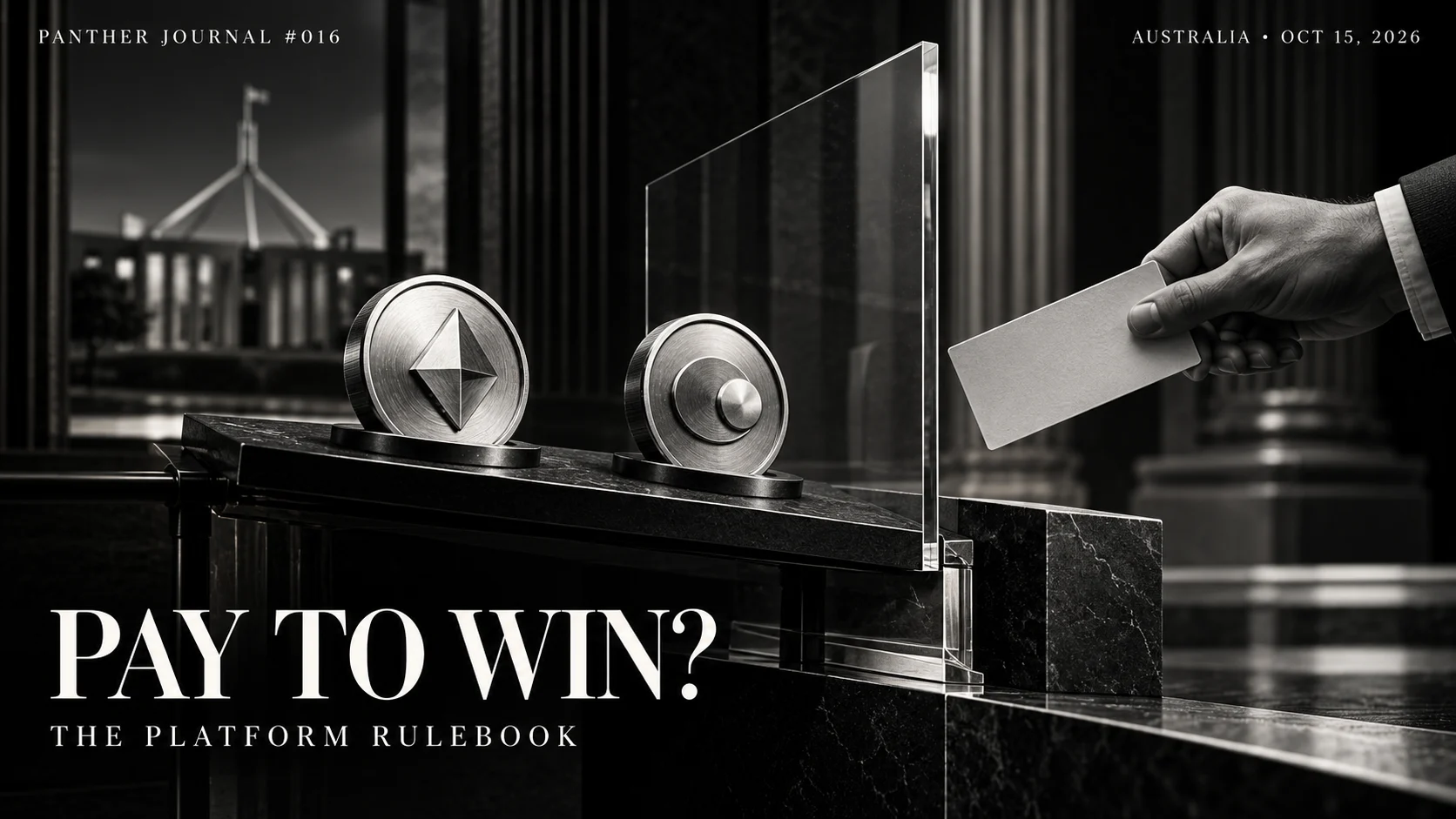
Verification: this article describes proposals, not final standards. The timetable follows CP 392 issued today; an older ASIC roadmap contains a different April commencement date. The cover is a conceptual illustration of commercial influence, not an allegation against a named platform.
Responses
No responses yet. Start the conversation.
Panther Journal — The intelligence brief
Stay ahead of the story.
Free. New investigations delivered when published. Unsubscribe anytime.