Key points
- DNB authorized Qivalis B.V. on October 13 to issue, distribute and redeem electronic money.
- The euro token is not live; a MiCA white paper and other requirements still precede issuance.
- The next tests are token terms, reserve disclosures, supported networks and distribution partners.
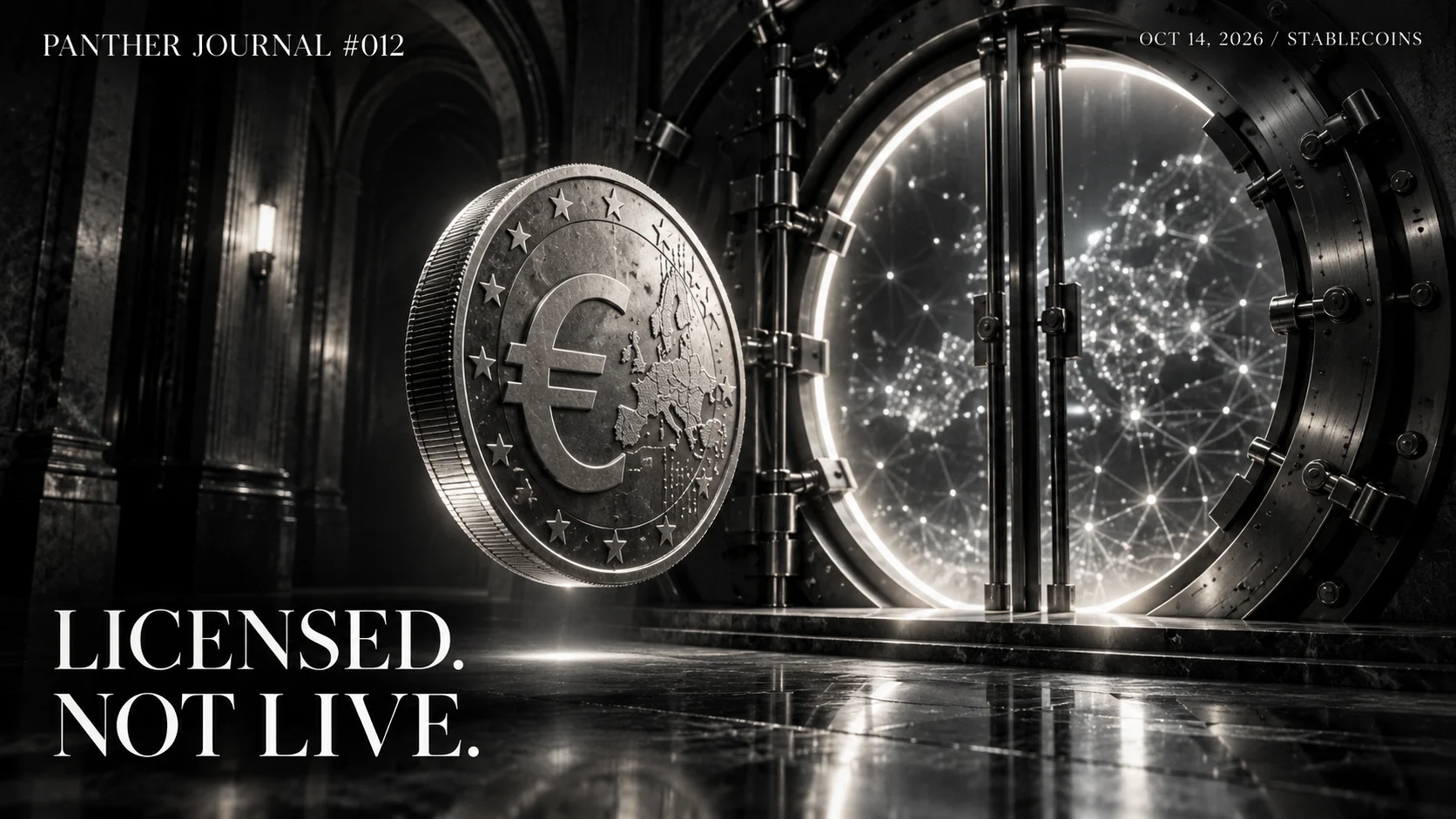
The door has a regulator’s seal. There is still no token on the other side.
On October 13, De Nederlandsche Bank (DNB) authorized Qivalis B.V. to issue, distribute and redeem electronic money. The Amsterdam company, backed by 37 European banks across 15 countries, announced the milestone on October 14 as it prepares a euro-denominated stablecoin. Yet Qivalis says it does not currently issue electronic money or offer payment services to the public. Authorization and launch are different events.
What the Dutch register actually confirms
DNB’s public register lists Qivalis as an electronic-money institution, relation R203793. Its three authorized activities—issuance, distribution and redemption of electronic money—each have an October 13 entry date. The register was updated October 14. This is independently checkable legal status, not merely a consortium announcement.
In its October 14 statement, Qivalis calls the license a decisive condition for issuing an electronic money token under the EU’s Markets in Crypto-Assets rules. It also says issuance still depends on applicable MiCA requirements and publication of a white paper. The company gives a broad ‘next months’ launch window, not a firm date.
Thirty-seven banks do not make a live asset
The consortium includes major European lenders, but its size tells readers more about potential distribution than present usage. Qivalis plans to route the token through eligible banks, exchanges, payment providers and market infrastructure, rather than directly to every consumer. That could put an on-chain euro inside existing financial channels. It does not establish that any member bank will distribute it, that any exchange will list it, or that any payment rail is operating today.
Qivalis says the planned token will use full reserves. The public announcement does not identify a live token contract, supported networks, initial supply, detailed reserve composition or operating redemption interface. Without the white paper, counterparties cannot yet compare a finished product against the issuer’s promises. CoinDesk and Cinco Días reported the authorization separately on October 14. Cinco Días reported a November Ethereum target based on company sources; Qivalis’s own public release does not commit to that chain or month, so neither is a confirmed launch term.
The next checks before anyone uses it
The meaningful milestones are the MiCA white paper, named distribution partners, supported chains, reserve and redemption disclosures, and evidence that minting and transfers have begun. A bank-backed issuer might improve institutional access to euro settlement, but interoperability and actual liquidity will determine usefulness. For readers comparing stablecoins, Panther’s earlier cross-border reserve analysis explains why a token’s legal issuer and redemption path matter as much as its peg.
Panther Takeaway
Qivalis has a license for the issuer, not proof of a working euro stablecoin. The regulator’s entry is real and consequential; the investable or usable product is still a set of documents and integrations to verify.
Sources and verification
- DNB public register: Qivalis B.V., updated October 14, 2026; authorization entries dated October 13.
- Qivalis announcement, October 14, 2026; issuer claims, distribution plan and remaining MiCA steps.
- CoinDesk reporting, October 14, 2026.
- Cinco Días reporting, October 14, 2026; launch-target claim attributed to company sources, not an official product release.
Responses
No responses yet. Start the conversation.
Panther Journal — The intelligence brief
Stay ahead of the story.
Free. New investigations delivered when published. Unsubscribe anytime.