Key points
- BitGo’s public July 27 pull request named Cash Cat; Robinhood announced availability on August 6.
- A trader claims more than $6 million across Cash Cat and PONS. The Block could not verify profits or wallet control.
- Software support is a public clue, not a binding listing commitment. A successful historical trade does not validate every similar signal.
Ten days before Robinhood’s Cash Cat listing announcement, the memecoin ($CASHCAT) was already named in a public BitGo pull request. A new trader account turns that code change into a bigger claim: more than $6 million made across two memecoin trades.
The records support the early clue. They do not establish that profit—or prove who controlled every wallet in the story.
The Block’s November 15 report, published at 20:33 UTC, examines an account posted by pseudonymous trader @3i the previous evening. Its value for readers is the evidence boundary: public infrastructure work can precede an announcement, while the investment conclusion remains an inference.
The Cash Cat listing clue in plain sight
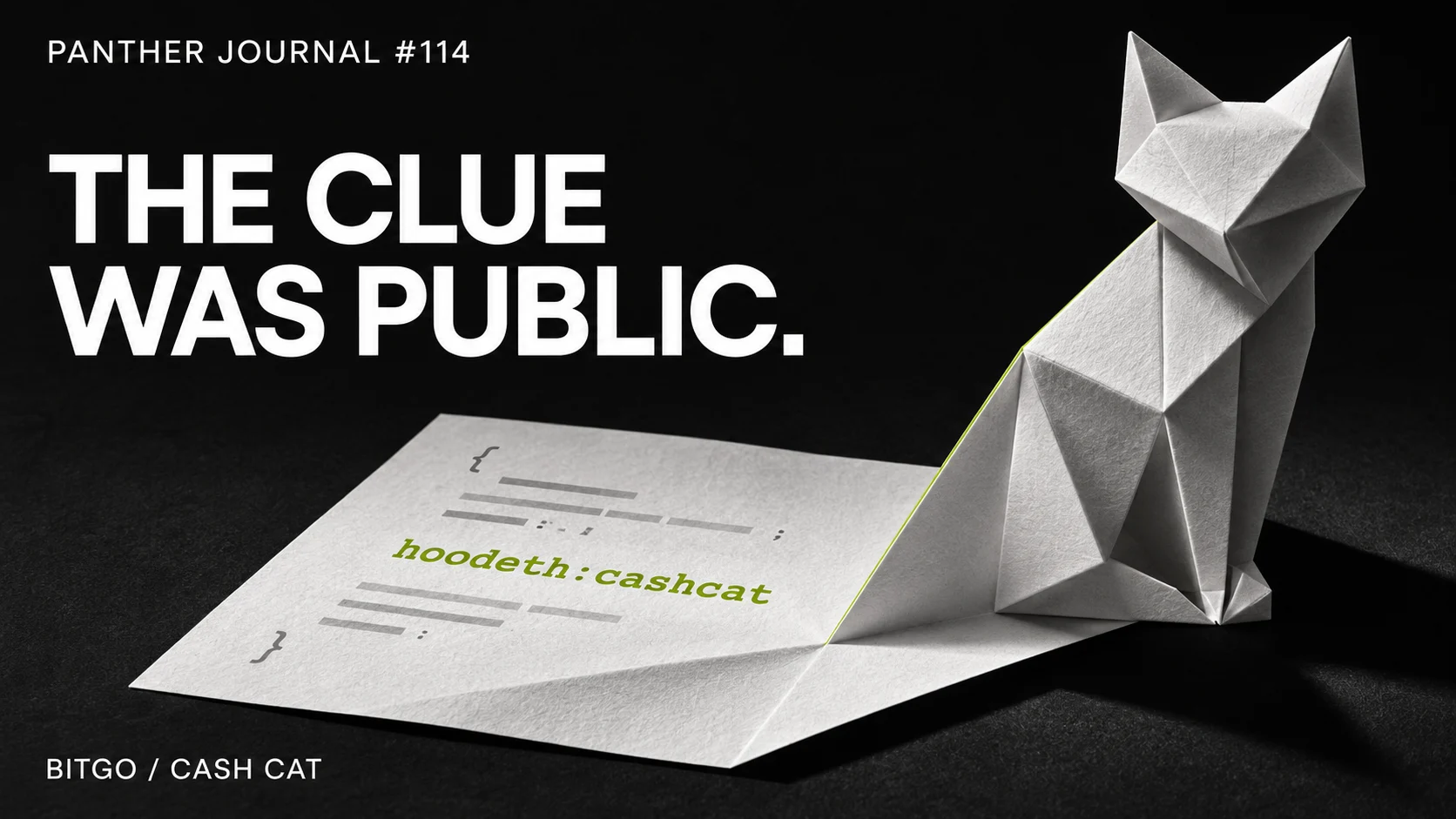
BitGoJS pull request #9357 was opened on July 27 and merged on July 28, 2026. Its summary explicitly adds hoodeth:cashcat to hoodethTokens.ts on Robinhood Chain. It also includes unrelated token additions and a naming change.
The changed files contain the Cash Cat entry. This is a directly inspectable development record, with dates and a specific token identifier.
Robinhood’s official announcement followed on August 6 at 13:31 UTC, stating that $CASHCAT was available in its app and Robinhood Legend. The ten-day interval runs from the public pull request to that announcement.
A custody-software addition establishes support work. It does not, by itself, identify the requesting client, commit an exchange to listing the asset or disclose when trading will begin.
What the trader actually claims
In the original X article, timestamped November 14 at 20:27 UTC, @3i says their group monitored BitGo development and Wintermute-related activity while building a Cash Cat position. They claim more than $4 million from Cash Cat and another $2 million from PONS.
The account itself acknowledges that numerous exchanges use BitGo and that the code change alone was insufficient for the trader’s desired position size. That qualification matters when the story is shortened into a screenshot promising an easy listing signal.
The Block reports that it confirmed several public records and found trading activity consistent with parts of the account. It could not independently verify the profits or control of the wallets. It also found a token-whitelist addition on one Wintermute-labeled contract later than the trader’s described alert. That discrepancy leaves part of the reconstruction unresolved.
The trader’s suspicions about insiders and description of a later PONS event as a trap remain assertions. The evidence reviewed here does not establish either allegation.
An information advantage can become an exit narrative
For a reader encountering a fresh “listing leak,” ask what the evidence actually commits anyone to doing:
- A public pull request can show planned software support; a merge can show acceptance of that change.
- An exchange announcement can establish the published trading availability and its stated scope.
- A wallet purchase shows activity by an address. Attribution needs additional evidence, and purchases alone cannot establish realized net profit.
Those distinctions become more valuable after a successful trade is publicized. A historical winning example supplies no denominator for similar code changes that never produced a listing, or trades that lost money. It also says little about today’s liquidity or how many other observers now watch the same signal.
Panther’s wallet-tracing guide explains how to build a transaction trail without turning address labels into proven identities.
Panther Takeaway
The public code clue is real. The claimed windfall needs an accounting. Read the original record, preserve its date, and keep software support, exchange intent, wallet identity and realized profit as separate questions.
Sources and verification
Panther checked the BitGo pull request and changed files, Robinhood’s listing post and @3i’s original account. Wallet reconstruction and its limitations are attributed to The Block; this article does not present an independent wallet-ownership or profit audit.
PANTHER JOURNAL #114.
Responses
No responses yet. Start the conversation.
Panther Journal — The intelligence brief
Stay ahead of the story.
Free. New investigations delivered when published. Unsubscribe anytime.