Key points
- Ledger confirmed an unauthorized implant in one affected device; its precise role in reported losses is not established.
- CryptoBilis paused hardware-wallet sales while Ledger investigates reports from Southeast Asian buyers.
- The $86 million and $93.2 million figures are researcher estimates, not confirmed totals from Ledger.
- Ledger advises recent buyers from the reseller to defer setup or consider moving assets to a new signer with a new recovery phrase.
A hardware wallet promises one thing above all: your keys stay under your control. The Ledger CryptoBilis investigation asks what that promise means when a device may have been altered before it reaches its owner.
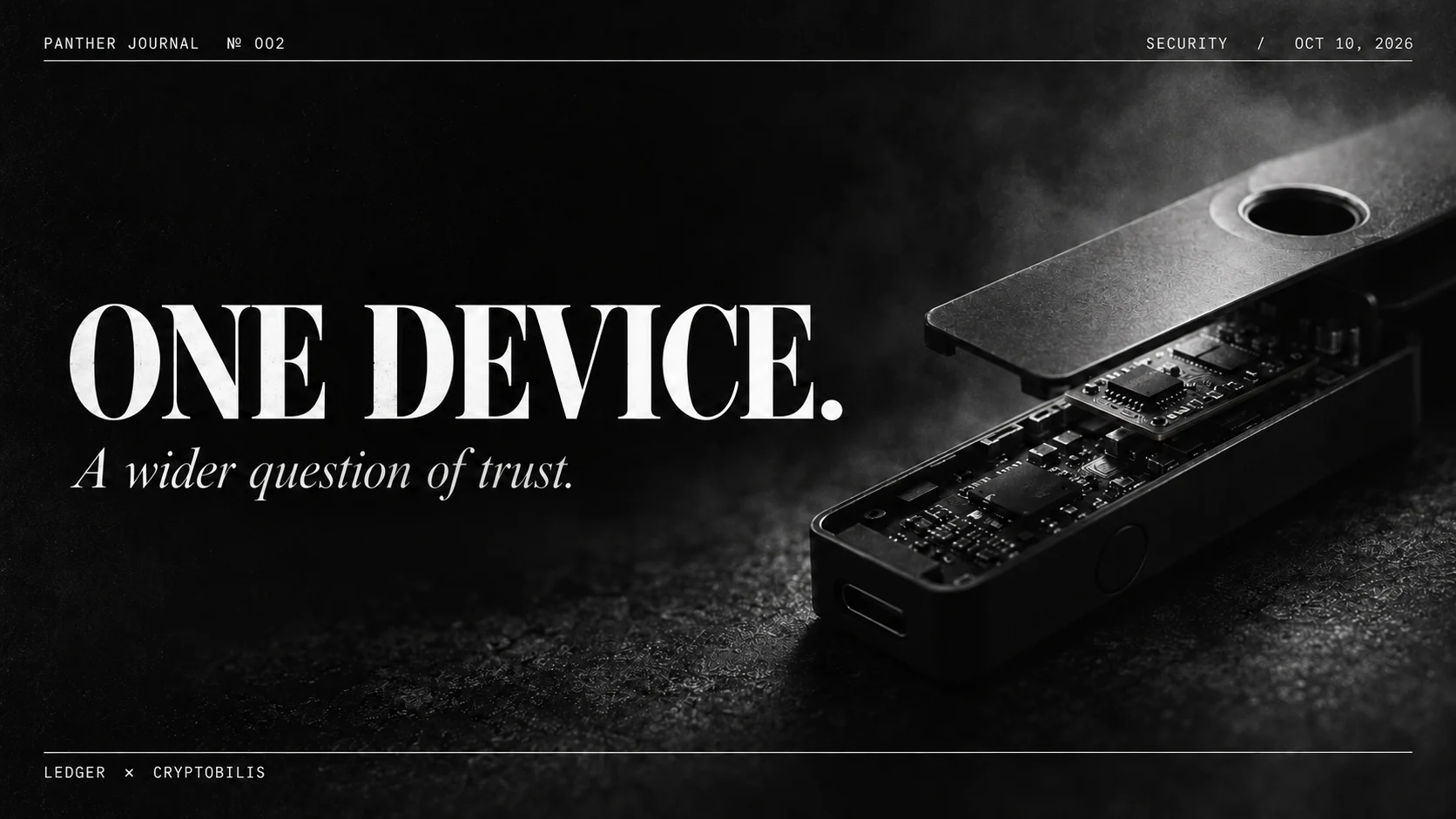
On October 10, Ledger said it had found an unauthorized hardware implant in one device belonging to an affected user. The discovery followed reports of missing funds from people in Southeast Asia who bought Ledger products through reseller CryptoBilis. Ledger had already asked the reseller to pause sales and shipments while it investigated.
The finding is serious. It is also narrower than the most viral version of the story. Ledger has not established publicly that the implant caused every reported loss, how many devices were modified, or the total value lost.
What Ledger has confirmed
Ledger’s October 9 warning concerned customers who purchased from CryptoBilis in the preceding 90 days. It advised those who had not yet set up a device to wait. Customers who had already set one up were told to consider moving assets to a new Ledger signer with a newly generated recovery phrase.
On October 10, Ledger confirmed the implant in one affected user’s device. The company said CryptoBilis had stopped sales of hardware-wallet inventory pending the investigation. Ledger also said it had no indication that its own infrastructure, systems or services had been compromised, according to its statement reported by Cointelegraph.
CryptoBilis appears in Ledger’s public reseller directory for several Southeast Asian markets. That listing explains why a buyer might reasonably have viewed the purchase channel as legitimate. It does not tell us when or where the confirmed device was altered.
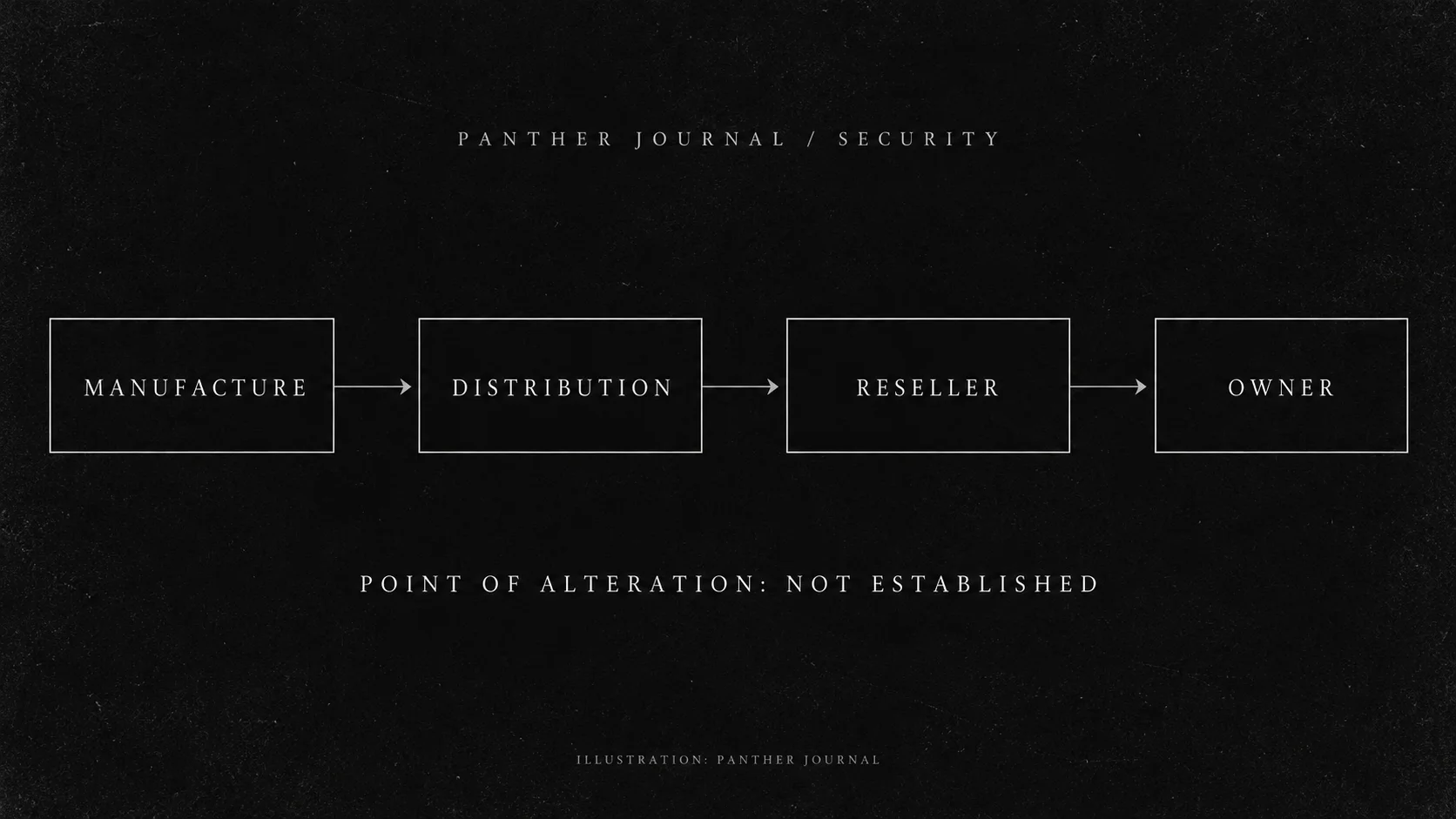
Illustration: Panther Journal. Ledger has not established where the confirmed device was altered.
The number that raced ahead of the evidence
An estimate of more than $86 million in suspected losses circulated from onchain investigator Specter. The Block reported that an earlier researcher had estimated more than $72 million, and noted that the figures had not been independently confirmed. The estimates may count overlapping addresses or transactions.
Bitquery subsequently published its own investigation, counting $93.2 million across 315 wallets on six networks as of its stated measurement window. That is a researcher’s attribution and valuation, not a total confirmed by Ledger. Onchain transfers can be examined, but linking each address to a particular device, buyer and cause requires evidence beyond the chain.
The distinction matters. An alarming estimate is newsworthy. It should not be recast as a verified loss figure or proof that every reported wallet was compromised in the same way.
The trust boundary before the first transaction
Hardware wallets are designed to keep a recovery phrase and signing keys away from a connected computer. Yet the security model also depends on what happened before first use: manufacture, distribution, storage, sale and setup.
A physical implant found in one affected device shows that this boundary deserves scrutiny. It does not, on the evidence released so far, establish the implant’s precise function or the path by which it entered the device. Images and proposed explanations circulating online need independent forensic confirmation.
For an owner, the practical question is not whether a device looks convincing. It is whether the recovery phrase was generated and displayed in an environment that only the owner controlled. If that phrase was exposed, possession of the hardware alone cannot restore secrecy.
What remains unanswered
- How many devices, if any beyond the confirmed example, contain unauthorized components?
- At which point in the supply chain was the confirmed device modified?
- Did the implant expose a recovery phrase or otherwise contribute to the reported losses?
- Which onchain transfers can be independently tied to customers who bought from CryptoBilis?
Those questions are for the continuing investigation. Treating an early theory as a settled account could mislead buyers and make attribution harder.
Ledger directs affected customers to its official support channels. It has warned that scammers exploit incidents like this and that it will never ask for a 24-word recovery phrase. Anyone following this case should verify updates through Ledger’s own channels and never disclose a recovery phrase to a supposed investigator or support agent.
The Panther takeaway
Self-custody begins before the first signature. A device can keep keys offline only if the path to the owner deserves trust.
One unauthorized implant is confirmed. The broader damage and mechanism are not. The responsible story is to hold both facts at once—and watch what the investigation can actually prove.
Sources and verification
- Ledger Support, October 9 customer warning. Primary statement on the CryptoBilis investigation, sales pause request and 90-day buyer guidance. The X page may require sign-in for some readers.
- Ledger Support, October 10 investigation update. Primary statement confirming one unauthorized implant and the continuing investigation; the X page may require sign-in.
- Ledger, official reseller directory. Primary listing for CryptoBilis in regional markets.
- Cointelegraph, Ledger confirms unauthorized hardware implant, October 11, 2026. Reports Ledger’s subsequent statement, its limits and its position on company systems.
- The Block, Ledger investigates wallet drains involving CryptoBilis buyers, October 9, 2026. Independent reporting on the initial warnings and unconfirmed loss estimates.
- Bitquery, onchain investigation, updated October 11, 2026. Researcher’s methodology and evolving attribution; figures are identified as its estimates, not Ledger-confirmed losses.
Responses(1)
Davin
amazing infos
Panther Journal — The intelligence brief
Stay ahead of the story.
Free. New investigations delivered when published. Unsubscribe anytime.