Key points
- Luxor confirms unauthorized hashrate redirection through Commander affecting just over a dozen client accounts.
- The company says Commander was patched within two hours; Luxor Pool and LuxOS were unaffected.
- Luxor pledges full payment for redirected hashrate. Individual settlement amounts and completed credits are not established by the announcement.
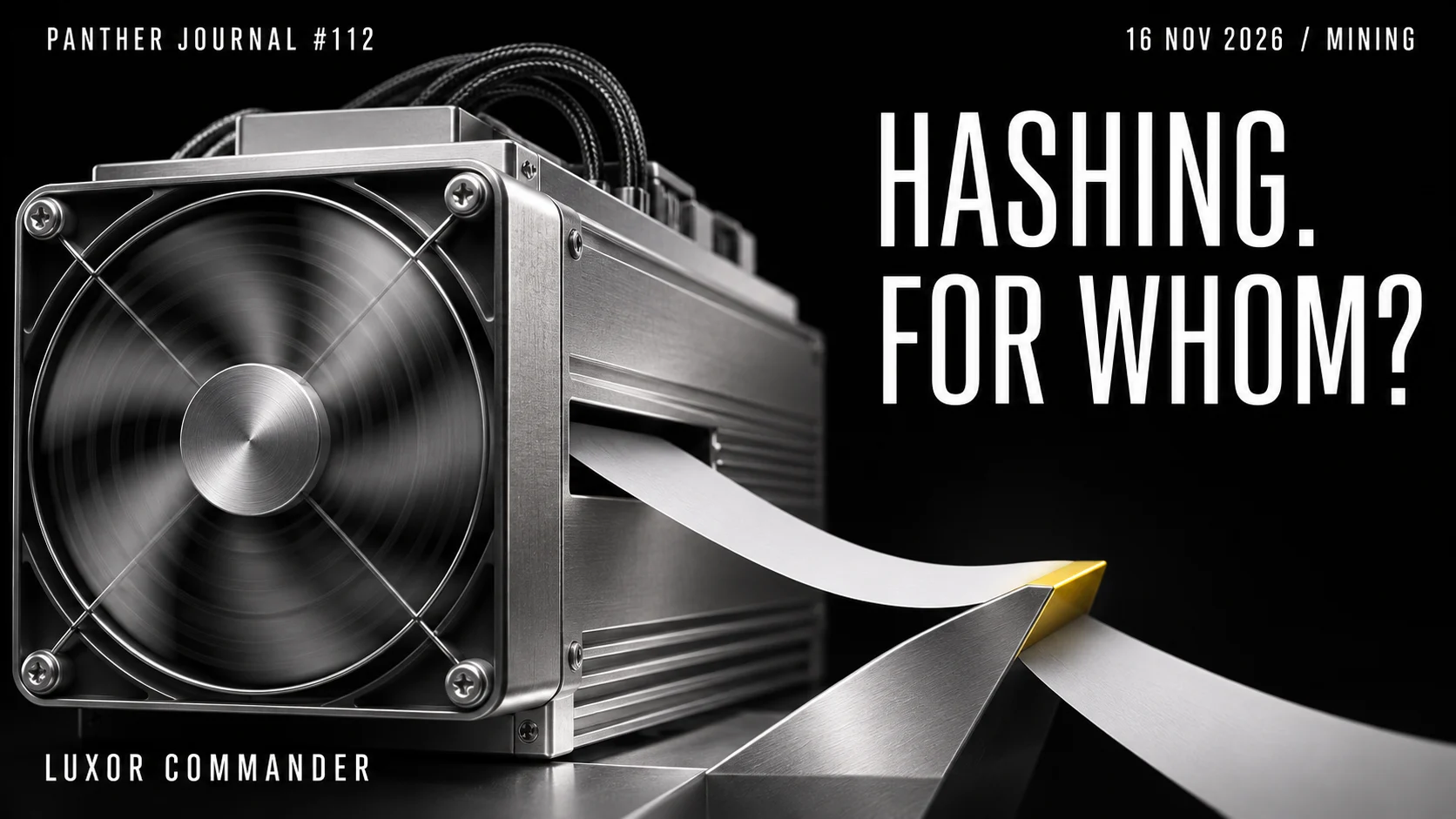
An ASIC can keep hashing, its fans spinning and electricity bill climbing, while its work benefits the wrong destination. A fleet that appears alive can still be economically off course. The Luxor Commander incident puts that distinction in focus.
In a November 15 statement, Luxor confirmed unauthorized hashrate redirection through its fleet-management tool and pledged to pay affected clients as though their mining had continued normally. Bitcoin ($BTC) miners now need to verify both restored settings and the resulting compensation.
Luxor Commander incident: what the company confirms
Luxor puts the impact at just over a dozen client accounts. It says affected machines were pointed at a different pool for a limited period, Commander was patched within two hours, and restoration to original pool settings began. The company reports no data exfiltration and says Commander is operating normally with no user action required.
A follow-up statement says the issue was isolated to Commander, with Luxor Pool and LuxOS unaffected. Those are company findings; the promised full post-mortem remains important for assessing the technical failure and remediation.
TokenPost’s November 15 report, published at 3:26 p.m. EST, independently reports the compensation pledge and account scope. A client-account count should not be treated as a count of individual mining machines.
Running machines can still work for someone else
Commander’s official bulk-actions documentation explains why the management layer matters. It can send pool changes, power adjustments, firmware operations and reboots across hundreds or thousands of miners. Its pool-settings command changes the stratum URL, worker name and password.
Those capabilities explain the potential reach of a control-layer incident. They do not establish the specific exploit used here. The public company update supplies no detailed technical chain showing how the unauthorized access occurred.
An uptime indicator answers whether a machine is running. Operators also need to know where it is contributing work and which configured account receives credit. Treat physical availability and economic destination as separate checks.
Check restoration and settlement separately
For affected operators, the immediate review can be concrete:
- Compare current pool and worker settings with the intended configuration, including fallback destinations.
- Preserve the affected interval and relevant command history before routine troubleshooting obscures it.
- Reconcile the company’s compensation record with the account and period covered.
The documentation says Commander’s Actions Log records action type, source, timestamp, site, agent and affected miners, with per-machine results available in action details. That makes it a useful starting point for an operator’s review; Panther has not inspected private customer logs.
Luxor’s payment pledge is not evidence that every client has already received a settlement. The statement gives no individual amounts or payment deadline. Owners should retain the eventual account-level calculation and credit record.
Fleet access and node maintenance also deserve separate attention. Panther’s Bitcoin Core advisory coverage addresses version-dependent node and mining exposure; it is a different part of the operating stack.
Panther Takeaway
Check where the work goes, then check who pays for the missing interval. A patched control system restores operations. The compensation record closes the financial question.
Sources and verification
Primary evidence: Luxor’s November 15 disclosure and follow-up, plus Commander’s published bulk-actions and logging documentation. Independent confirmation: TokenPost’s November 15 compensation report. All are linked above. No fleet test, private log review, attacker-wallet attribution or completed reimbursement is claimed.
PANTHER JOURNAL #112 · Verified November 16, 2026 (Asia/Dhaka).
Responses
No responses yet. Start the conversation.
Panther Journal — The intelligence brief
Stay ahead of the story.
Free. New investigations delivered when published. Unsubscribe anytime.