Key points
- More than $19 billion in leveraged positions were liquidated within 24 hours, across roughly 1.62 million accounts.
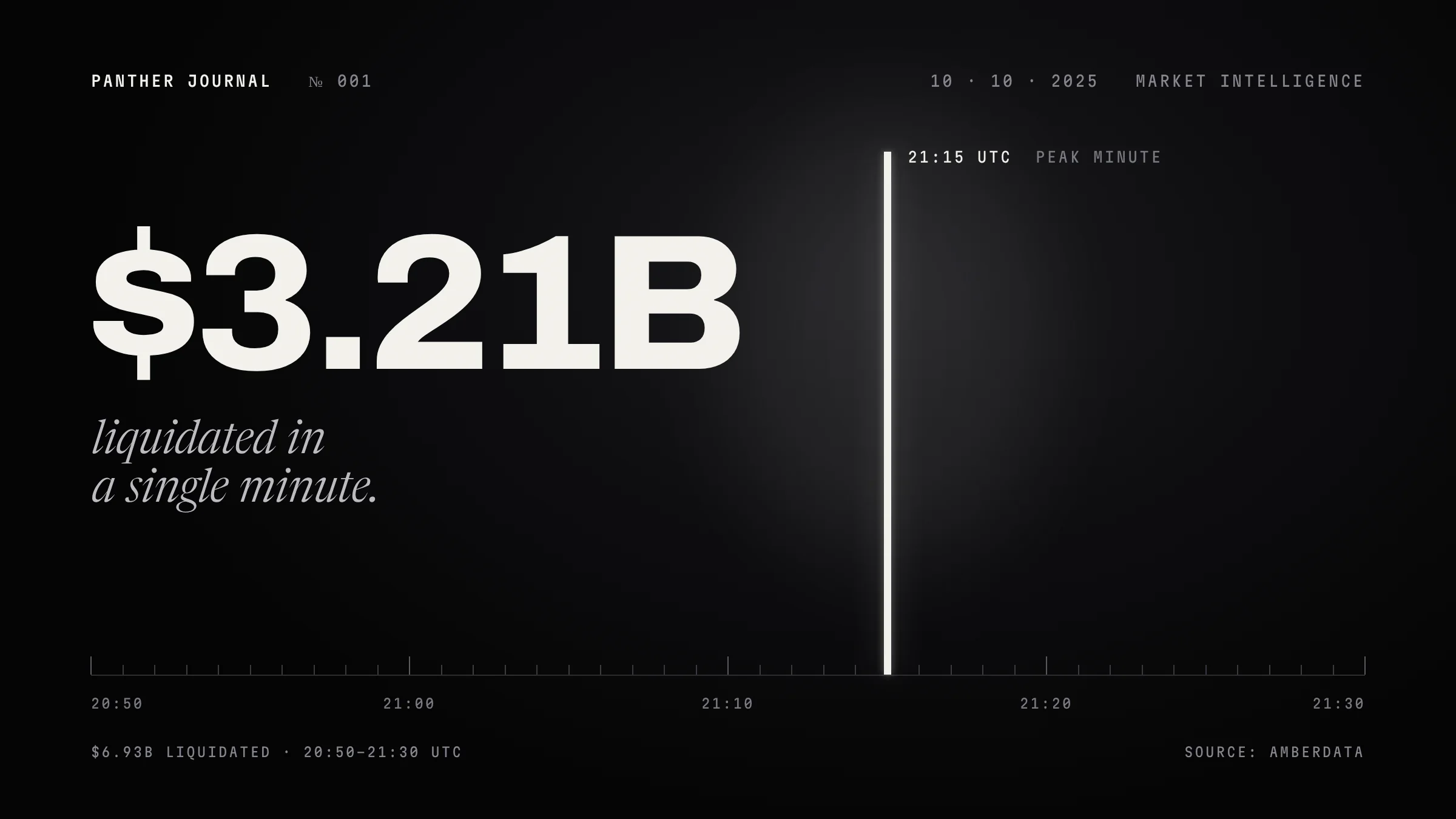
- At 21:15 UTC, about $3.21 billion was liquidated in a single minute.
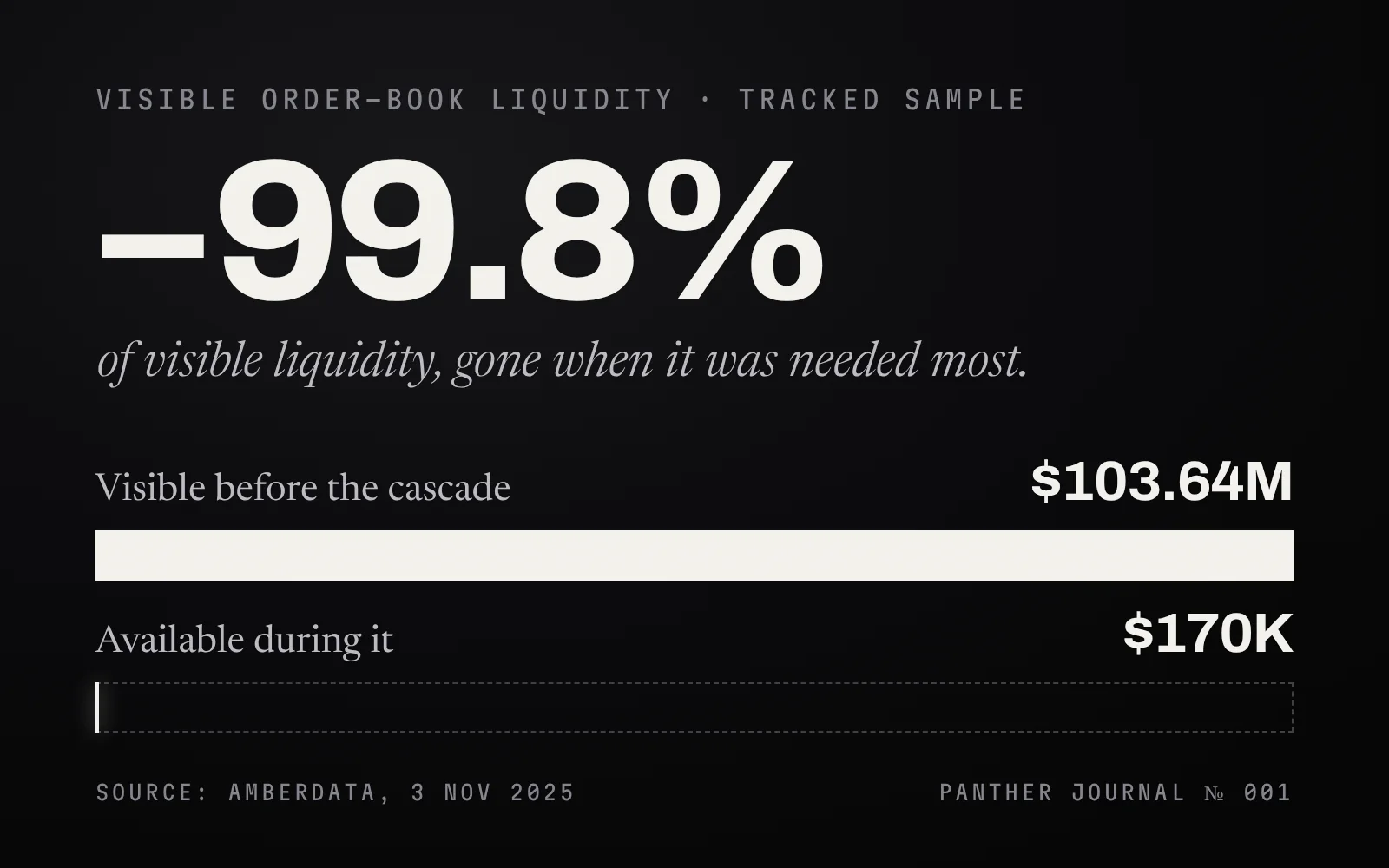
- Visible order-book liquidity in Amberdata’s tracked sample fell from about $103.64 million to $170,000.
- Position sizing and leverage management matter more than confidence in a market prediction.
On October 10, 2025, cryptocurrency markets experienced one of the most violent deleveraging events in their history.
More than $19 billion in leveraged positions were liquidated within 24 hours. Approximately 1.62 million trading accounts were affected.
The catalyst was geopolitical. The destruction that followed was mechanical.
A US-China tariff threat triggered a selloff across risk assets. Bitcoin declined sharply, while smaller cryptocurrencies suffered substantially larger losses.
But the most important events were unfolding beneath the price charts.
The minute everything accelerated
Research published by Amberdata reconstructed the liquidation cascade using derivatives and market-liquidity data. Its findings were extraordinary.
Between 20:50 and 21:30 UTC, approximately $6.93 billion in positions were liquidated across the markets it tracked. At 21:15 UTC, the liquidation volume reached approximately $3.21 billion in a single minute.
That concentration reveals something important about modern cryptocurrency markets. Trading decisions are not always made by humans.
When leveraged positions reach liquidation thresholds, automated systems begin closing them. Those forced transactions can move prices enough to trigger additional liquidations.
The result is a feedback loop.
When liquidity disappears
Under normal conditions, traders assume that large cryptocurrency markets offer sufficient liquidity to enter and exit positions. October 10 demonstrated how quickly that assumption can fail.
Amberdata found that visible order-book liquidity in its tracked sample fell from approximately $103.64 million to just $170,000. At the same time, bid-ask spreads widened dramatically.
The market was experiencing two problems simultaneously. More positions needed to be sold, while fewer buyers were available to absorb the selling.
This combination transformed an ordinary market decline into an extraordinary liquidation event.
The critical lesson is that liquidity observed during normal conditions may not remain available during a crisis.
The collateral problem
The crash also exposed vulnerabilities in the systems used to value collateral.
On Binance, the synthetic stablecoin USDe briefly traded around $0.65. Importantly, this was not a marketwide collapse of USDe’s peg. The token remained near $1 on most other major venues, and its issuer’s mint-and-redeem mechanisms continued functioning.
However, localized price dislocations can create serious problems when leveraged positions depend on exchange-specific collateral valuations.
The precise contribution of individual exchanges to the broader crash remains disputed. Binance has argued that the primary liquidation wave resulted from macroeconomic selling, heavy leverage and disappearing liquidity, rather than a failure of its core trading system.
The distinction matters. Identifying a vulnerability does not automatically establish that it caused the entire market crash.
What changed after October 10?
One year later, the industry has made progress in several areas. Galaxy Research’s October 9, 2026 anniversary assessment highlights developments in regulation, collateral infrastructure and token design.
However, progress does not mean liquidation risk has disappeared.
- Perpetual futures still permit substantial leverage.
- Market makers can still reduce exposure during extreme volatility.
- Collateral valuations can still become disconnected across trading venues.
The fundamental mechanism remains possible: forced selling can generate additional forced selling.
What traders should learn
The first lesson is that liquidation risk extends beyond price direction. A trader can correctly identify an asset’s longer-term value and still lose a leveraged position during a temporary liquidity crisis.
The second lesson concerns market depth. Trading volume alone does not establish whether sufficient liquidity will remain available during extreme volatility.
The third lesson concerns collateral. The safety of a leveraged position depends partly on the mechanisms an exchange uses to value the assets supporting it.
Finally, the October 10 crash demonstrates why position sizing and leverage management matter more than confidence in a market prediction.
The Panther takeaway
Markets don’t need everyone to become a seller to collapse. They only need enough forced sellers and too few buyers.
October 10 was not simply a story about cryptocurrency prices falling. It was a demonstration of how financial infrastructure behaves under extreme pressure.
One year later, the most important question remains unanswered.
Has the industry become resilient enough to prevent the next liquidation cascade from becoming another systemic crisis?
Sources and verification
- Galaxy Research, A Year Later, 10/10 Is Shaping Up to Be a Blip in Crypto’s History, October 9, 2026. Anniversary analysis confirming the $19 billion liquidation event, approximately 1.62 million affected accounts, exchange-specific dislocations and subsequent industry developments.
- Amberdata, How $3.21B Vanished in 60 Seconds, November 3, 2025. Primary market-data investigation supporting the peak-minute liquidation figure, the 40-minute cascade and the order-book liquidity measurements.
- Federal Reserve Bank of New York, Liberty Street Economics, Synthetic Stablecoins and Financial Stability, June 23, 2026. Research examining how derivatives funding, collateral structures and synthetic stablecoins can amplify market stress.
- CoinDesk, Binance pins crypto’s worst-ever liquidation day on macro risks, not exchange failure, January 31, 2026. Documents Binance’s position, acknowledged operational incidents and the continuing disagreement about responsibility.
Responses(1)
sunny
I like it, thanks Panther, subscribed
Panther Journal — The intelligence brief
Stay ahead of the story.
Free. New investigations delivered when published. Unsubscribe anytime.